Our sustainability projects
As part of our sustainability management, we are implementing various projects in the environmental, economic and social spheres. Below are selected examples from the years 2024 to 2026.
Ecology
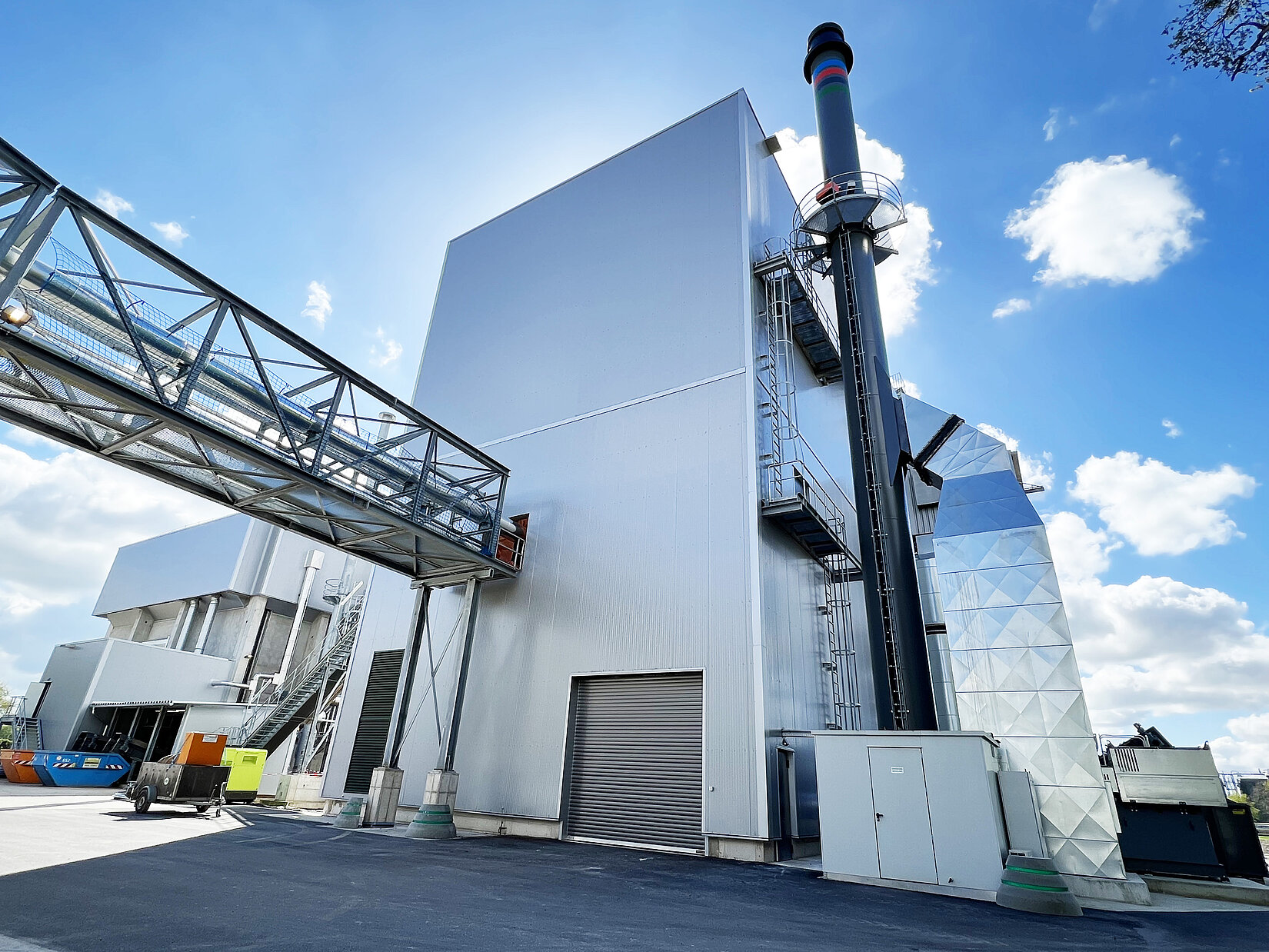
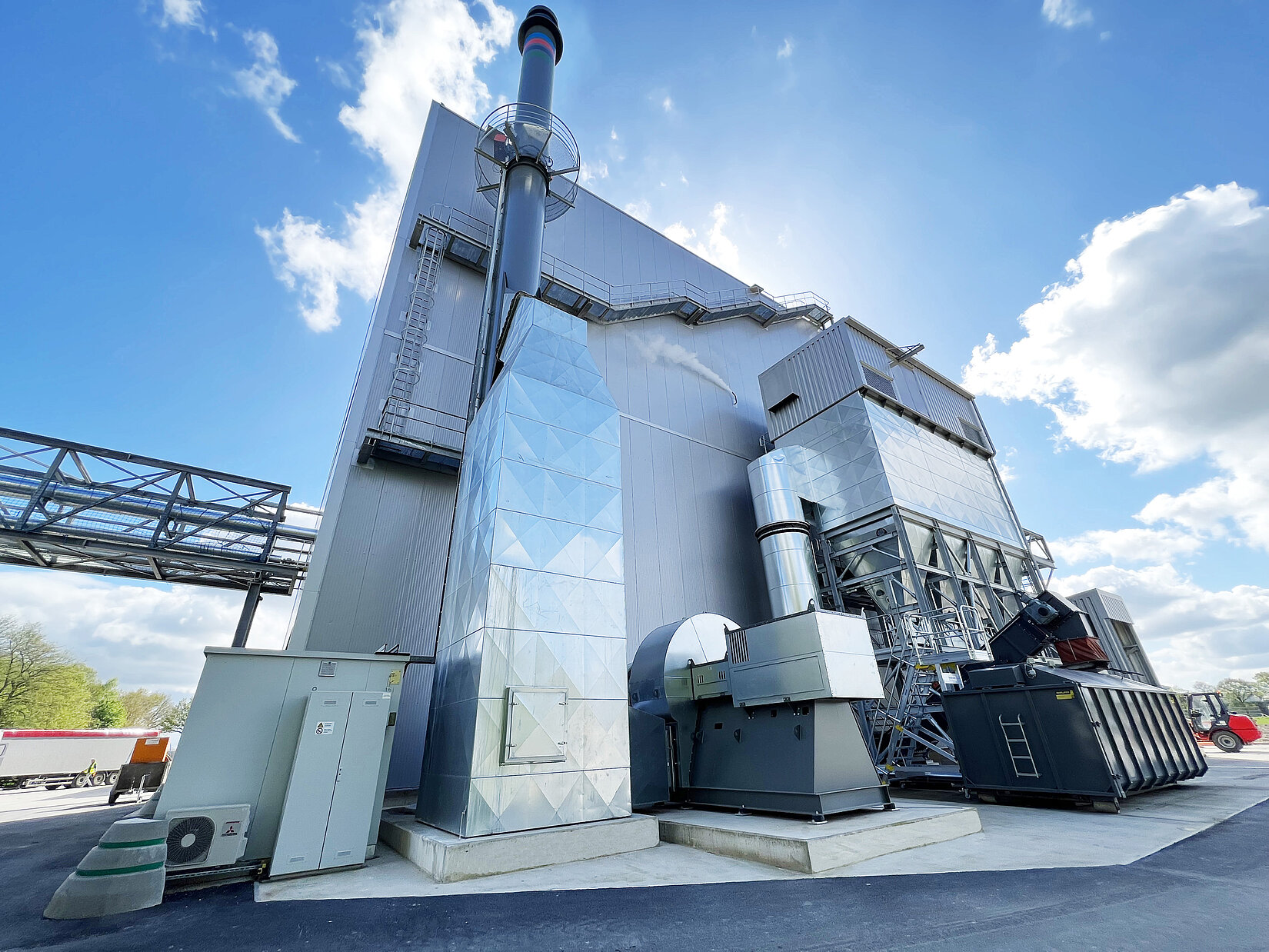
The biomass heating plant
The biomass heating plant
Why did we build a biomass heating plant?
Here are the facts about our major project on Lüscher Straße:
- Part of our measures to reduce energy-related CO₂ emissions
- Supporting a reliable long-term energy supply at the site
- Use of biomass in the form of waste wood classified as A1 and A2 (industrial wood waste and used wood)
- Generation of heat in the form of saturated steam, which is supplied to the production facilities via the steam network. The saturated steam is used, amongst other things, for high-temperature applications such as peeling and deep-frying potatoes.
How does it work?
The waste wood is stored in a closed warehouse fitted with air filters. This prevents dust and odours from escaping to the outside. The material undergoes mechanical processing prior to use. Metal parts and other foreign materials are automatically sorted out during transport from the fuel store to the biomass boiler. The waste wood is then thermally utilised in a biomass boiler at temperatures between 850 and 950 degrees. The hot flue gases produced in this process heat water in a steam boiler to produce saturated steam. This is channelled via a pipeline network to the production facilities, where it is used as an energy source for various production processes.
Social
Construction of two schools in Tanzania
The Wernsing Food Family, in partnership with the Reiner Meutsch Foundation FLY & HELP, supports the construction and further development of educational infrastructure in Tanzania. As part of this collaboration, school projects in Tanzania have been initiated and expanded since 2023.
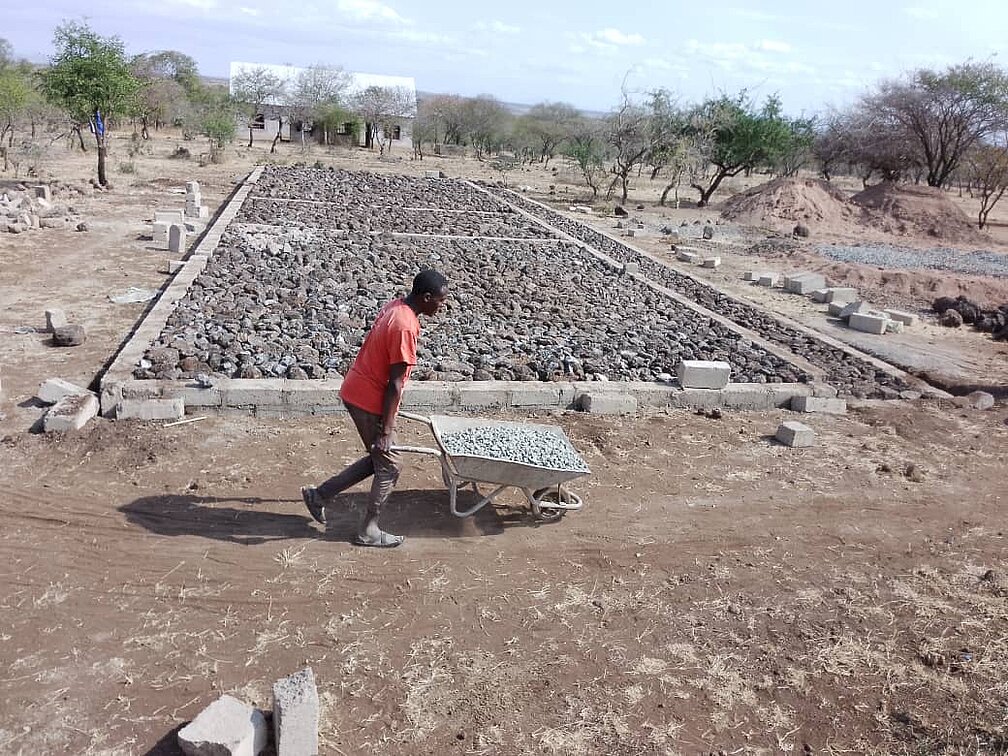
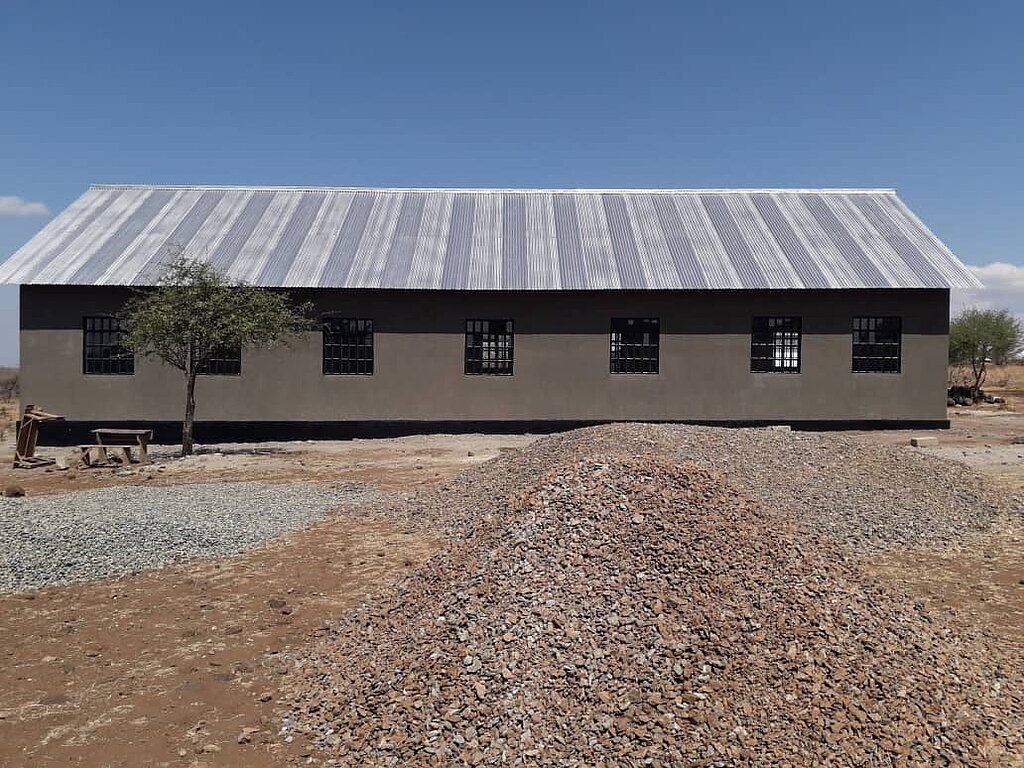
The first Wernsing school was built in Makuyuni Juu, a hamlet of the main village of Makuyuni in the Monduli district of the Arusha region. The project was launched in August 2023 and initially involved the construction of classrooms, an office and separate toilet facilities. According to the project partners, the school opened in February 2024. Further expansion is planned for the coming years, including additional classrooms, a staff room and a teacher’s accommodation.
Another school project receiving support is the Kariati Primary School in Tanzania. The school was officially opened on 23 May 2026. According to the project partners, 134 children were attending the school at the time of the opening.
Kariati Primary School is currently being expanded. As part of construction phases II and III, the project plans include four additional classrooms, a toilet block and a teacher’s house. At the time of reporting, construction work was underway.
Economy
AI-powered pallet classification
As part of an innovation project, we are utilising artificial intelligence to support pallet classification. The aim is to further develop the assessment of used pallets through modern image processing and sensor technology, and to actively promote the reuse of pallets.
The new system captures pallets using 14 cameras and three laser sensors. Based on the data collected, neural networks assist in assigning pallets to defined quality classes. This enables pallets to be assessed according to their actual condition and directed towards further use, repair or disposal.
This technology forms part of our ongoing efforts to develop processes in a data-driven manner and to strengthen the circular economy in general, as well as within the pallet pool. A precise and traceable assessment of pallets lays the foundation for keeping these usable resources in the economic cycle for as long as possible.
At the same time, the project provides valuable insights into the condition and usage of pallets. This data helps us to continuously analyse our processes and identify opportunities for improvement. AI is used as a supporting tool in this process and is continuously monitored and further developed.
Through this project, we are combining digital innovation with the aim of using existing resources responsibly and supporting the reuse of pallets in the long term.